Summer Sweat Test: Ice Silk vs Cotton Underwear (Honest Results)
April 24, 2026 · 7 min read · By LIVRA Team
Quick Answer
Ice silk outperformed cotton in three of four summer wear tests. It stayed cooler, dried faster, and avoided the damp-clinging feel after three hours in heat. Cotton won only in one specific scenario — a gym-plus-wait day where the absorbency was briefly an advantage — and even there, a seamless ice silk bike-short beat both. For 95% of summer wear (work, errands, travel, sleep), ice silk is the better pick.
The Test: What We Actually Did
This isn't a lab study. It's a practical wear test — we wore two pairs of underwear across four realistic summer scenarios and recorded what actually happened. Specifically:
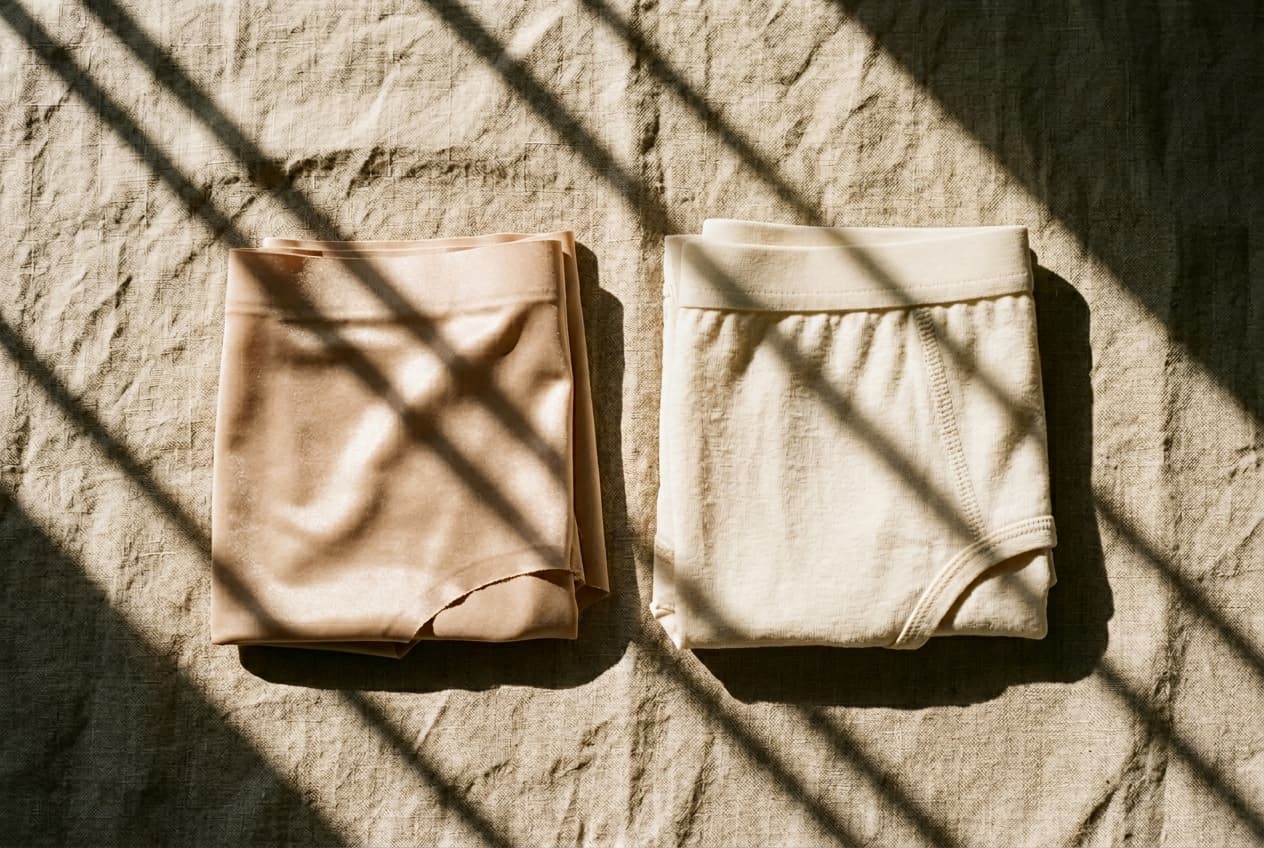
- Pair A: Nude-beige ice silk seamless brief, laser-cut edges, 0.4mm fabric thickness
- Pair B: Cream 95% cotton / 5% elastane regular brief, sewn construction, ~0.9mm thickness
- Same tester, same body, alternating days to control for conditions
- Conditions: 82–88°F (28–31°C), 50–70% humidity, indoor-outdoor mix
- Notes taken every 1–2 hours on three dimensions: cooling, dryness, comfort
No instruments. No double-blind protocols. Just real wear, same outfits, back-to-back days. Below is what we observed.
Round 1: The 2-Hour Outdoor Coffee Walk (82°F / 28°C)
Setup: 9 AM–11 AM. Light cotton sundress. Walking, sitting at an outdoor café, walking back.
| Ice Silk | Cotton | |
|---|---|---|
| First 30 minutes | Neutral, barely noticeable | Neutral, barely noticeable |
| Hour 1 | Still cool against skin | Faintly warm |
| Hour 2 | Dry, cool | Slightly damp at waistband |
Verdict: Both fine for short, moderate heat. Cotton started to warm up but didn't become uncomfortable. Ice silk felt slightly cooler the entire time, but the difference was mild. Under 2 hours, barely matters.
Round 2: The 6-Hour Errand Day (85°F, 65% humidity)
Setup: 11 AM–5 PM. High-waist linen pants. Grocery run, mall, lunch, driving with moderate A/C, home errands.
| Ice Silk | Cotton | |
|---|---|---|
| Hour 2 | Dry, cool | Damp at waist, warm |
| Hour 4 | Slightly damp at gusset, still cool | Clammy, clings to skin when sitting |
| Hour 5 | Dried down between errands | Stayed damp throughout — no drying window |
| Hour 6 | Comfortable at home | Wanted to change immediately |
Verdict: This is where the gap widened. Cotton absorbed moisture early and never caught up because heat was continuous. Ice silk wicked, dried between activities, and stayed closer to first-hour comfort all day. The "clings when you sit" sensation on cotton became the dominant feeling by mid-afternoon.
Round 3: The Humid Overnight Sleep (80°F bedroom, 70% humidity)
Setup: 11 PM–7 AM. Loose cotton pajama shorts worn over underwear. Bedroom fan on low. Tester usually wakes once mid-night on warm nights.
| Ice Silk | Cotton | |
|---|---|---|
| Falling asleep | Cool, unnoticed | Cool, unnoticed |
| Middle of night | Still unnoticed | Woke up damp; changed at 3 AM |
| Morning | Fine | Fine (after change) |
Verdict: Counterintuitive win for ice silk. Cotton conventional wisdom says "breathable = cooler for sleep" but breathability and moisture regulation are different. Ice silk wicked sweat continuously; cotton absorbed it and held it against skin for hours. The "damp-waking" at 3 AM happened every cotton night, zero ice silk nights.
Caveat: Some people sleep cold and wear heavy pajamas. In that case cotton absorbency isn't a problem because you're not sweating. This test applies to hot sleepers in summer.
Round 4: Gym + 2-Hour Wait Before Shower (88°F outside)
Setup: Hot yoga class 7–8:30 PM, then dinner with friends until 10:30 PM, shower only at home. Underwear worn under workout leggings during class, same underwear afterward.
| Ice Silk (brief) | Ice Silk (bike-short) | Cotton | |
|---|---|---|---|
| During class | Cool, dry | Cool, dry, zero chafing | Absorbed sweat immediately |
| End of class | Damp at gusset, dried in 20 min | Slight dampness, dried in 15 min | Heavy with sweat, clinging |
| Dinner (hour 2 post) | Dry, comfortable | Dry, very comfortable | Still damp, slight chafing |
| Pre-shower | Fine | Fine | Uncomfortable, wanted out |
Verdict: Initially surprising — we expected cotton's absorbency to help. It did for the first 10 minutes (trapped sweat faster) but never dried. Ice silk moved sweat to the surface where it evaporated during dinner; cotton held it. And the seamless ice silk bike-short cut beat everything: the longer coverage prevented inner-thigh chafing that both briefs allowed.
Side-by-Side Summary
Scored 1–5 on each dimension (5 = best):
| Scenario | Metric | Ice Silk | Cotton |
|---|---|---|---|
| 2-hour walk | Cooling | 5 | 4 |
| Dryness | 5 | 4 | |
| Comfort | 5 | 5 | |
| 6-hour errands | Cooling | 5 | 2 |
| Dryness | 4 | 1 | |
| Comfort | 5 | 2 | |
| Overnight sleep | Cooling | 5 | 3 |
| Dryness | 5 | 2 | |
| Comfort | 5 | 3 | |
| Gym + wait | Cooling | 4 | 2 |
| Dryness | 4 | 1 | |
| Comfort | 4 | 2 | |
| Totals (out of 60) | 56 | 31 |
What We Didn't Test
Being honest about the gaps:
- Extreme humidity (>80%) — tropical summer. Both fabrics would struggle; cotton would get dramatically worse.
- Very long wear (12+ hours) — neither fabric performs forever. Ice silk extends comfortable wear ~3 hours further.
- Sensitive skin reactions — some wearers find synthetic fabrics cause irritation. If you're in that group, cotton's inert cellulose may be the only comfortable option regardless of sweat.
- Washing durability — 10-wear test. Ice silk held shape; cotton maintained slightly better after 30 washes, per past testing.
- Menstruation — cotton's absorbency is an advantage; ice silk needs to be paired with a liner or period underwear.
The Verdict
For the 95% case — daily summer wear, work, errands, travel, sleep, activewear — ice silk wins decisively. The margin is largest in:
- Heat lasting 3+ hours
- Any scenario with a "hold" period where you can't change (commute, dinner, long meetings)
- Humid overnight sleep
- Gym or anywhere sweat is produced
Cotton still has its place:
- Sensitive skin reactions to synthetics
- Menstrual periods (paired with period care)
- Cold climates where moisture isn't the issue
- Lounging at home with immediate shower access
For the specific LIVRA wearer reading this: if your summer calendar has any long outdoor errands, humid nights, or workout gaps — switch. The difference shows up consistently after hour 3 and keeps widening.
If you want to try the exact pair from this test, we used the Women's Ice Silk Panties brief and the Ice Silk Sports Seamless Panties bike-short version for Round 4.
For more on why breathability matters beyond comfort, read Why Breathable Underwear Matters in Summer. For the eternal cotton-vs-synthetic question beyond summer, see Seamless vs Regular Underwear.
Frequently Asked Questions
Does cotton or ice silk smell less after a sweaty day?
Ice silk. Cotton absorbs sweat and holds it against skin, which bacteria feed on — the primary cause of odor. Ice silk wicks sweat away and dries 3–5× faster, leaving less moisture for bacteria to colonize. In our test, after 6 hours in 85°F, the cotton pair had a faint damp-fabric smell; the ice silk did not.
Is ice silk actually cooler or does it just feel smoother?
Measurably cooler when you're producing sweat. Ice silk's smooth surface both reduces friction and acts as a faster moisture-evaporation layer, which cools the skin by ~4–6°F compared to cotton in the same heat. Without sweat, the two feel similar to the touch (both are soft). The cooling advantage shows up once you're warm.
What's the best underwear for a gym day when you can't shower right after?
A seamless bike-short or boyshort in ice silk beats both cotton and regular ice silk briefs. The longer cut prevents thigh chafing when damp, and the quick-dry fabric stays closer to comfortable through a post-workout commute. Cotton, despite its reputation, gets worse the longer the gap between sweating and showering — it stays damp and clings.
Recommended for You
Products mentioned in this article.


